
Rejection Is the Point
From George Costanza to AI girlfriends—and what we’re losing along the way

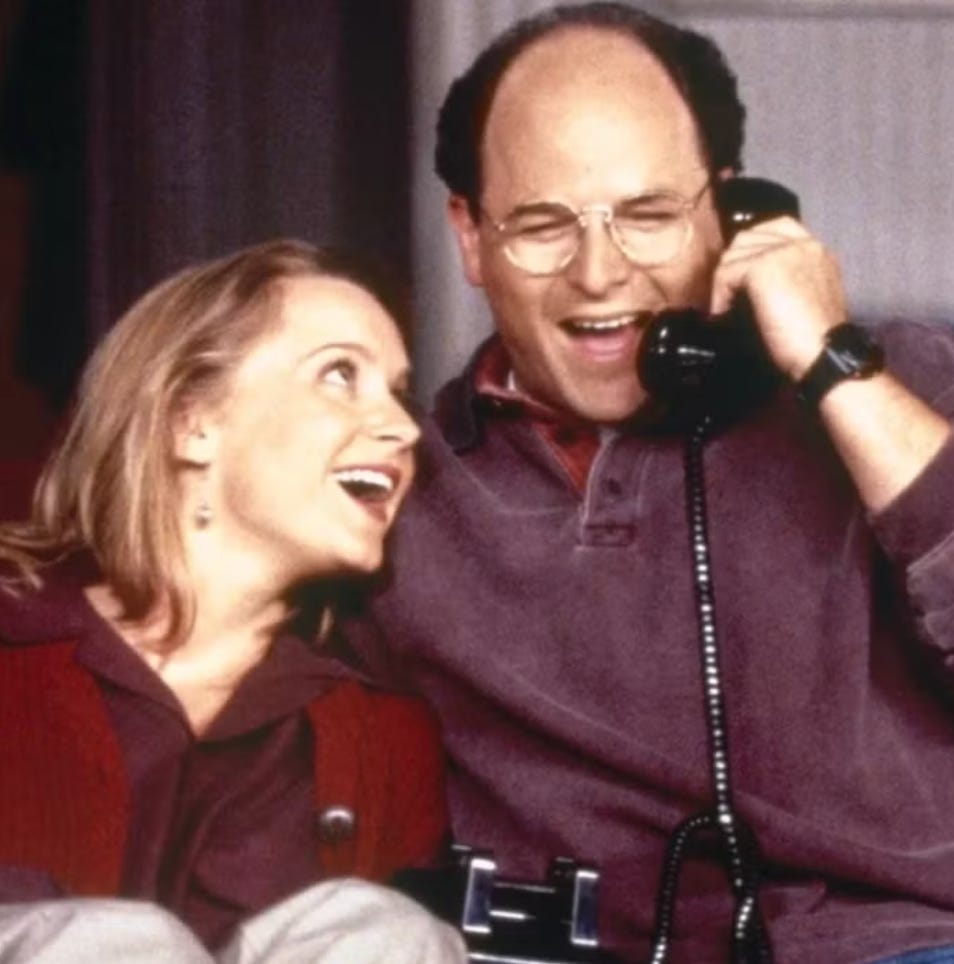
George Costanza from my parents all time favorite show (and one of my favorites), “Seinfeld”, was not a good looking dude. He was chubby and bald, a little awkward and didn’t have a whole lot of swagger. I wouldn’t describe him as “self confident” or “charismatic.”
But George had one thing going for him.
He was not afraid of rejection.
This is not to say he enjoyed it. No one does. But he made a calculated decision: the brief moments where rejection felt crappy were worth it. After all, if you don’t try… how would you know?
Despite his awkwardness and anxiety, George would strike up a conversation with women he was interested in… at bars, the diner or even Central Park. Many of these interactions didn’t go how he hoped. Every one carried the risk of rejection and embarrassment.
But for those who watched the show, you know that something interesting happened.
The bald, chubby ball of conversation that was George constantly outkicked his coverage. He’d end up dating women you’d assume he’d never have a chance with if you took a glance at him and his date side by side.
George wasn’t immune to rejection. It sucked for him just like it sucks for all of us. His superpower was in his ability to handle it.
I’m convinced of one thing: Your success in life is directly related to your ability to put yourself out there and handle rejection… whether that’s potential mates, friends, investors, jobs, or business deals.
The Lower The Stakes, The Lower The Reward
In a way, George’s generation was lucky. They had no choice but to put themselves out there and meet people. Necessity is the mother of invention, as they say.
When I moved to New York… a risk in itself… I knew virtually no one. The dating apps were a built in social scene. And there was no shortage of women on them in Gotham.
The stakes were low. You could go on a date every night of the week if you wanted. Swipe away. Have 50 conversations going at once. Schedule something… or don’t.
In short, it made you feel “in demand.”
And better yet? The worst version of rejection was someone not replying to your message. Brutal, I know. Oh wait, I have 30 other unread messages. On to the next one.
How I met My Fiancee (and Why It Matters)
People often ask me the story of how I met my fiancee, and frankly I love telling it. It’s a story about right place right time, but it’s also a story about risk.
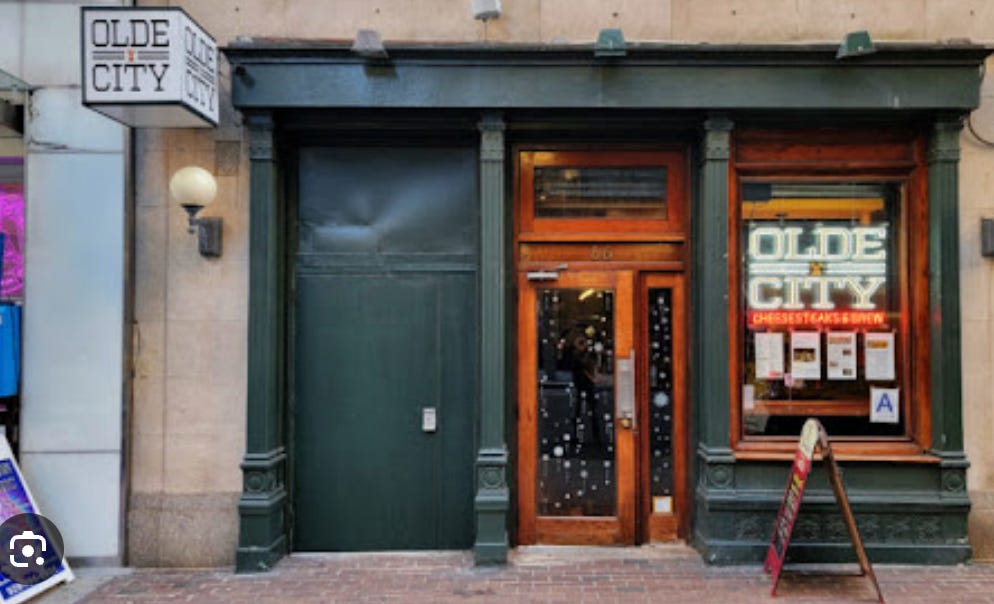
I’d been in New York less than a year. I was out for a long summer walk… sweaty and tired, and the Mariner game was about to start. As I stood in Flatiron (a neighborhood I didn’t know that well), I opened Maps and typed “Sports Bars.”
A place called “Olde City” popped up. I walked in and there she was. The cutest little thing with dark hair and big beautiful eyes working behind the bar. And some sort of aura emanating off of her that let me know I HAD to know more about this person.
I’ll never forget it.
Our first interaction was me asking her to change the channel to the Mariner game (romantic, I know). After the other dude bar tender left me alone, we finally got to talking and hit it off. I asked for her number as I was getting ready to leave. We scheduled a first date, and the rest is history.
Every variable that put us in that room together came back to one word: risk.
She took a second job at a sports bar despite knowing nothing about sports
I moved cross-country with two suitcases and almost no friends
I walked into a bar alone (doing anything along genuinely terrifies people… “what if they think I’m a loser with no friends?!”)
We struck up a conversation
I asked for her number directly… human to human. No number on the receipt. No “find her on IG and DM her later.” Lucky for me, because she doesn’t have IG.
Potential failure and rejection at every step. No matter. Worth it.
The Rejection Continuum
The stakes around romance have gotten lower with every generation:
The George Era
Pre-smartphone. You met people in the wild because you had no other option. Rejection was public. High stakes, high reward.
The Dating App Era
Lower stakes. Rejection happens through a screen. Dating apps are a net positive overall… I know many couples who met that way.
OnlyFans
Now we enter net-negative territory. You pay someone to simulate romantic interest without ever leaving your house. It’s like a strip club, except it doesn’t even include the benefit of at least leaving your house and being around humans.
The Final Boss: AI Companions
A partner who constantly validates you, never challenges you, and never rejects you. Motivation to meet real people drops. Why risk it?
The Final Final Boss
The complete rejection of women altogether… an ideology most visible at the extremes of online radicalization, including figures like Nick Fuentes. The idea being that not only are we not interested in women, they are actually the entire reason for our own failures.
Follow The Money…
My fear is that we are moving further and further down the risk-avoidance continuum… and that powerful incentives are pushing us there.
Put simply: Loneliness is a profitable business model. Our tech plutocrats and politicians are none too quick to try to stop the cash volcano from flowing.
Consider:
-28% of U.S. adults say they’ve had some form of intimate or romantic relationship with an AI chatbot or virtual companion
-~45% of men aged 18–25 say they’ve never approached a woman in person to ask her out.
-24% of men aged 22–34 reported not having had sex in the past year
Every coming of age movie from our childhood seemed to be about going out to a party and trying to hook up with someone of the opposite sex. Hello Superbad!
What’s the modern version? A desk chair, an AI girlfriend on one screen, and a grievance forum on the other? Coming to theaters and parents basements near you!
The second order effects of loneliness have been written about ad nauseam.
I’ll keep it short: You can draw a direct through-line from loneliness and withdrawal from society to polarization and political radicalization.
In fewer words: The system doesn’t work for me, so let’s blow it all up.
A Modest (and tactical) Proposal
1. Normalize Discomfort
We need to stop treating every feeling of discomfort, anxiety, or rejection as evidence that something is “wrong.” Not everything requires a medical diagnosis.
Discomfort is not trauma.
Anxiety is not always a warning sign.
Rejection is not a referendum on your worth.
Sometimes they’re just the cost of participating in real life.
2. Age-Gate Social Media Until 16
This is one of the cleanest interventions.
No Instagram, TikTok, Snapchat, X, etc.
Not just “parental controls”… real enforcement
Adolescence is when risk tolerance is formed, social skills are built and resilience to rejection or other “unpleasants” of life are formed. This doesn’t happen when you’re hiding behind a screen.
3. Tax Loneliness Based Business Models. And Give Tax Incentives to “Anti Loneliness” Businesses
Porn. Only Fans. AI Companions. Algo based social feeds. Tax them all.
Do the opposite with businesses that bring people together. Call it a “Third Places Tax Incentive.” Bars, social clubs, group workout classes, etc…
Tax policy is supposed to incentivize behaviors that benefit society. It’s also supposed to penalize those that extract from society.
Treat loneliness profiteers like cigarette or sugary drinks. Treat togetherness profiteers like real estate opportunity zones.
4. Teach Social Risk as a Skill
We teach algebra and test prep. We don’t teach:
how to approach someone
how to handle rejection
how to be uncomfortable without panicking
Ironically, AI can now do the algebra. We’re outsourcing the wrong things.
5. Rebuild Social Life Around Participation, Not Consumption
Dating apps, porn, AI companions, and online communities all share one thing:
They turn human connection into a monetizabe product.
Low risk. Low effort. Low reward.
What we should be encouraging instead:
Hobby-based communities
Co-ed sports leagues
Volunteer groups
In-person classes
Any environment where interaction is unavoidable and unscripted
These spaces force mild risk… which inherently prepares you for, well… less mild risk.
Final Thought
A society that cannot handle social discomfort will outsource connection to technology.
The second order effects of nihilism, polarization and loneliness are inevitable.
Rejection is not a bug of the human experience.
It is the human experience.
So ask the girl out. Drop the pick up line or the joke. Risk the “no.”
Does the thought make you anxious?
Join the club.
That means you’re still human, like George Constanza.
Love this. Getting told “no” and staying in the game is a real advantage. In CRE, raising capital means hearing a lot of no’s from investors and lenders. I always wrote down their questions and objections and asked a simple follow-up in my own head: what did I miss? That feedback made the next meeting better than the last.
As a proud graduate of the “George Era,” hear us, hear ye! Great piece!