
Why Genius Failed
How Leverage, Certainty, and the Smartest Minds on Wall Street Nearly Collapsed the System

Before founding Long Term Capital Management, John Meriwether built his reputation on the cutthroat trading desk of Salomon Brothers. For my Big Short fans, Salomon was the Wall Street firm that helped pioneer mortgage backed securities in the 1980s… the same instruments that would later be misused in the 2000s and contribute to a global financial meltdown.
In the 1980s, if you traded bonds you went through Salomon. Meriwether was the head of the firm’s bond arbitrage group.
He was the calm, cool, collected killer. No screaming or chest pounding, but he would rip your face off if it would help his or Salomon’s bottom line.
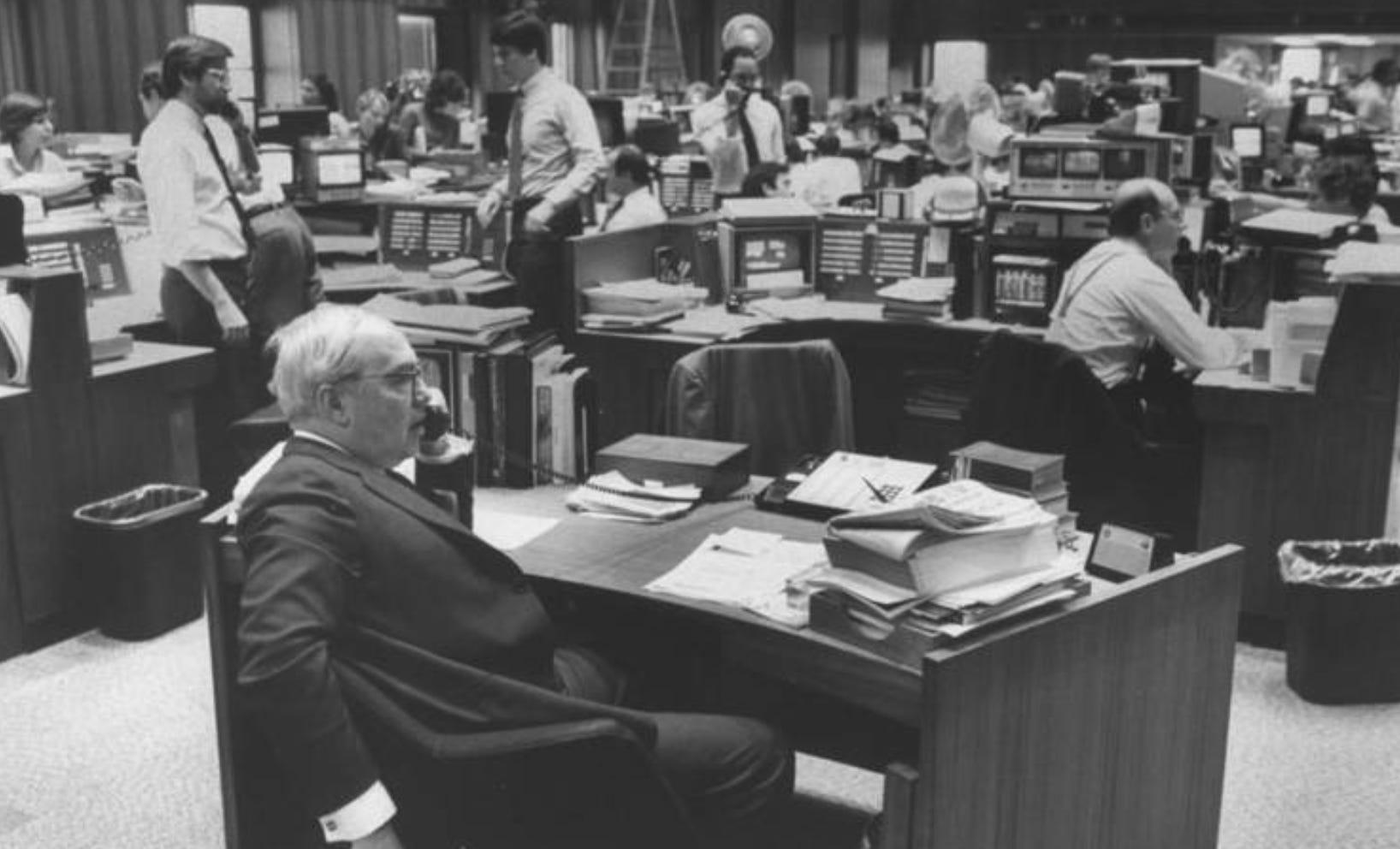
The arbitrage strategy went something like this:
Salomon would find two Treasury bonds that should trade at nearly identical yields.
One would be slightly mis-priced.
Leverage the position heavily.
Bet on the prices of the two bonds converging, wait for the spread to close.
The leverage didn’t feel risky if you knew exactly what was going to happen. It was math. And it worked marvelously for years, turning Meriwether into a (very wealthy) legend on “The Street.”
Then came 1991.
Salomon got caught up in a Treasury Auction Scandal. A trader named Paul Mozer had submitted false bids to get around rules limiting any single buyer to 35% of a Treasury issue. In short, he was trying to corner the market.
The scandal was massive. Salomon was US Treasuries and Treasuries were Salomon. Imagine Lebron getting caught up in a point shaving scandal, but make it finance.
Meriwether wasn’t charged. He wasn’t the architect of the scheme. But he had been aware of irregular bidding months earlier and failed to escalate it properly.
The optics were disastrous.
Meriwether resigned. And a major Salomon investor by the name of Warren Buffett stepped in as interim chairman to restore trust.
Meriwether walked away mostly intact. Wealthy, no criminal charges, and not barred from the industry.
Perhaps most importantly, he was still highly respected in the finance world. After all, he was an “earner.”
He also walked away with something else… a deep belief that markets were merely math problems to be solved. Salomon’s issue was never the math, it was a rogue trader making an ethical mistake.
So he started recruiting.
By 1994, he launched Long Term Capital Management.
He brought on two future Nobel winning economists by the names of Myron Scholes and Robert Merton. He also added a team of quantitative floor traders and a former Fed Chair named David Mullins… this was The Avengers of Wall St.
The idea was simple: Meriwether would take the same arbitrage strategy he employed at Salomon, but the training wheels were coming off. No more corporate constraints or regulation. No balance sheet limitations. And of course, more leverage.
Meriwether raised 1.3 billion in initial capital prior to the launch in 1994. This is a lot in 2026, it was ungodly 30 plus years ago.
Minimum investments were reportedly around $10 million. They turned people away. Exclusivity was part of the pitch.
Banks, sovereign wealth funds, and wealthy families and individuals lined up to try to get in. Like a Soho nightclub with a line out the door, and a bouncer asking you “who do you know here?”
The pitch was intoxicating.
“We’re not speculating, we’re exploiting market pricing inefficiencies.”
It was the same recipe that had worked repeatedly at Salomon, but now they had two Nobel Economists and a Fed Chair.
The initial returns were absurd.
-21% in 1994.
-43% in 1995.
-41% in 1996.
For a moment, it looked like they had solved the markets.
The strategy was familiar. Find mis-priced assets… say, Italian and German bonds. Then bet on convergence. The pricing difference might be pennies. But layer in tens of millions of dollars and leverage 30-to-1 or even 50-to-1 in some cases, and those pennies become fortunes.
They would borrow 50 dollars for every dollar of their own money they invested.
The models incorporated decades of bond market history, interest rate cycles, market crashes, recessions and currency shocks.
As far as Meriwether was concerned, they had covered everything.
In many ways, this was a classic mistake that you and I make.
LTCM assumed that if it hadn’t happened in the past, it couldn’t happen in the future. Correlations and market movements would always behave within historical ranges.
And if things got real bad, there would always be a buyer they could sell to. They would undoubtedly take some losses, but nothing existential… then they’d go back to making money tomorrow.
But as the saying goes, “history is a series of unprecedented events.”
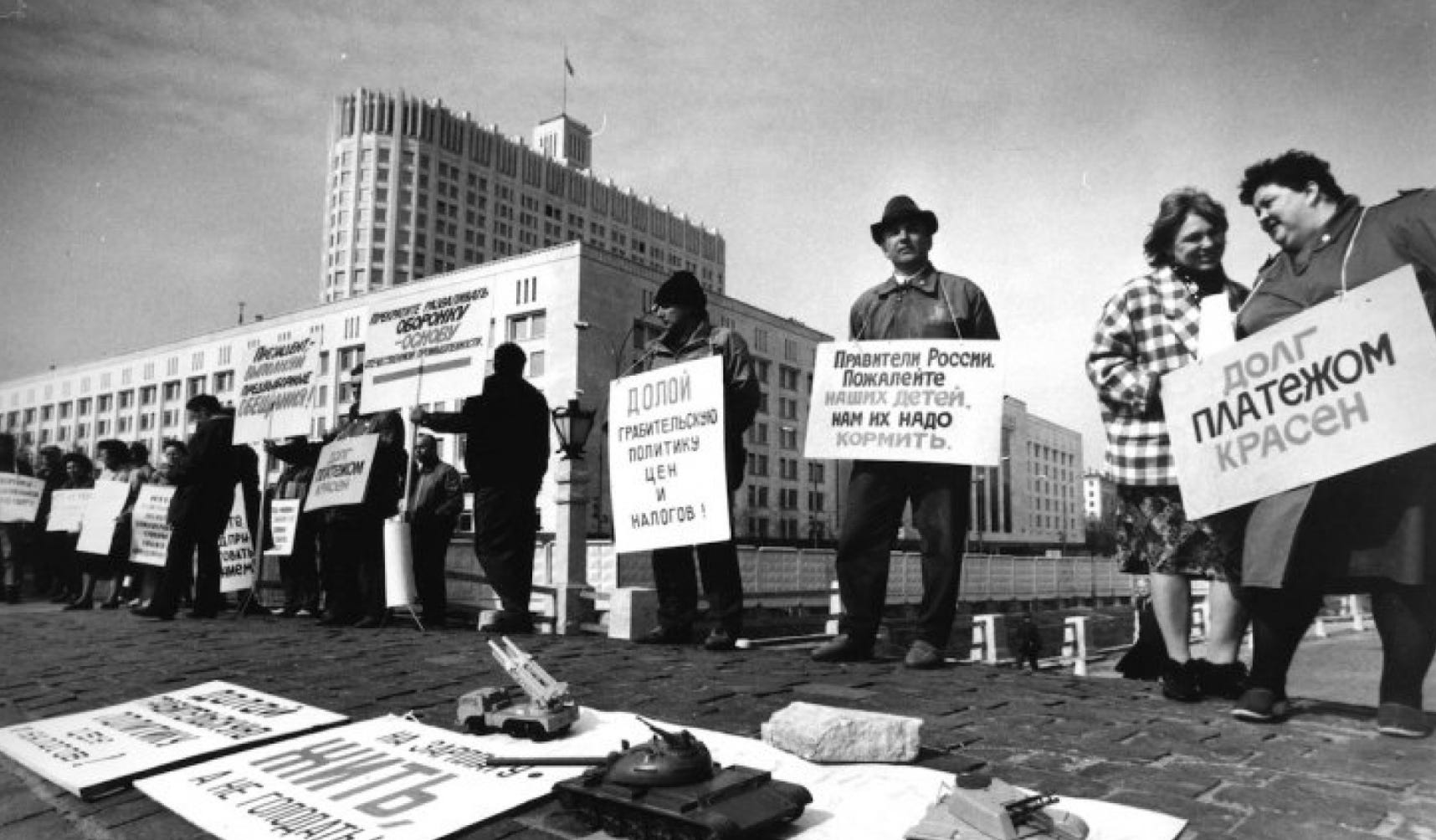
Then August of 1998 arrived.
Russia defaulted on it’s domestic debt. The post communist Russian economic miracle came undone at the seams.
Investors panicked and began dumping risky assets. Liquidity dried up everywhere… and the spreads that LTCM had long bet on converging began to widen drastically.
Spreads that had historically moved within narrow bands moved outside all recorded precedent.
LTCM lost 1.8 billion in August of 1998 alone.
Because of the leverage, small market moves could result in gargantuan losses.
Wall Street is not a place for those looking for a helping hand during a tough time, and vultures began circling the Long Term Capital carcas.
Counter-parties tightened credit, margin calls flowed in, and rival funds began trading against positions LTCM held.
This only caused spreads to widen further. By early September, the fund held less than 1 billion in equity… down from the 4.7 billion held jus a few months prior.
Eventually the Fed stepped in to prevent market contagion, and a number of banks bought what was remaining of LTCM before it took down the system. Genius had failed.
Meriwether and the Nobel economists were no match for the rare but inevitable gale force winds of the market.
Here’s what makes the story fascinating.
Wall Street is full of tales about managers gambling recklessly with other people’s money.
This was not one of them.
Warren Buffett summed it up:
“The principals of Long-Term Capital had most of their net worth in the business. They were very smart. They were highly motivated. It was not a case of managers playing with other people’s money. They had a very significant percentage of their own money in the fund.”
We talk extensively about the power of incentives in our weekly blogs, but what does it mean when the guys in charge are fully incentivized and lost more than any of their investors did?
This is not a story if incentives. It’s one of hubris, and what happens when intelligence is not complemented with humility. Buffett went on…
“If you mix leverage with brains, and you’ve got a lot of money, you can get in trouble.”
The story was simple. The strategy had worked for years, they were smarter than everyone else, and worst of all… they were convinced they had hedged out all market risk.
After all, they had modeled every set of circumstances that had ever occurred in markets.
Then a new circumstance arrived. You can’t model humans. You can’t model what people will do when they panic. Fear and greed don’t fit into and excel worksheet or a Claude GPT automation.
LTCM didn’t nearly collapse the global financial system because they were dumb, it happened because they were too smart.
Unintelligent people don’t raise 1.3 billion dollars for a fund. They don’t figure out how to borrow 50x leverage. They don’t know how to model every historical market event that’s ever happened.
They also don’t know how to light 4.7 billion dollars on fire.
The LTCM partners were aligned, motivated, and brilliant. And they still blew up.
The problem was they had an excess of intelligence and a shortage of humility.
For years, every widening credit spread had eventually converged. Volatility came and went. Math and models worked. Money kept flowing in.
They had drilled the world down to a measurable, controllable dial to be turned at their whims. Like a thermometer gage on the wall that you turn up in January and down in June.
LTCM didn’t assume nothing bad would ever happen. They assumed that if something bad did happen, it would be a version of bad that had already happened before.
That’s not how the world works.
Russia defaulted, and the dominos started falling. LTCM didn’t nearly collapse the financial system because they were stupid.
They nearly collapsed it because they were arrogant enough to assume that the past was the full menu of possible worlds.
In 1999, John Meriwether started a new fund called JWM… his initials. The fund employed precisely the same strategy as LTCM. Arbitrage. Credit spreads eventually converge.
In 2007, the global economy started to show cracks. Credit spreads widened instead of converging. JWM suffered catastrophic losses. By 2009, the fund was wound down.
“History is a series of unprecedented events.” Great quote! You can learn much from history's but it doesn’t cover every possible scenario. Irrationality is also not built in . “Stupid” people sometimes get “lucky” and “geniuses” sometimes get “screwed.” “No one saw that coming.”